




Crime & Courts

Liberation, Exile, and the Making of a Nationalist Hero (1924–1980)

By Ace Icing — Special Report for Sources Media News
Series: Robert Mugabe — War History, Lies, Truth, and Everything Else
2025


The Early Years: From Kutama to Consciousness

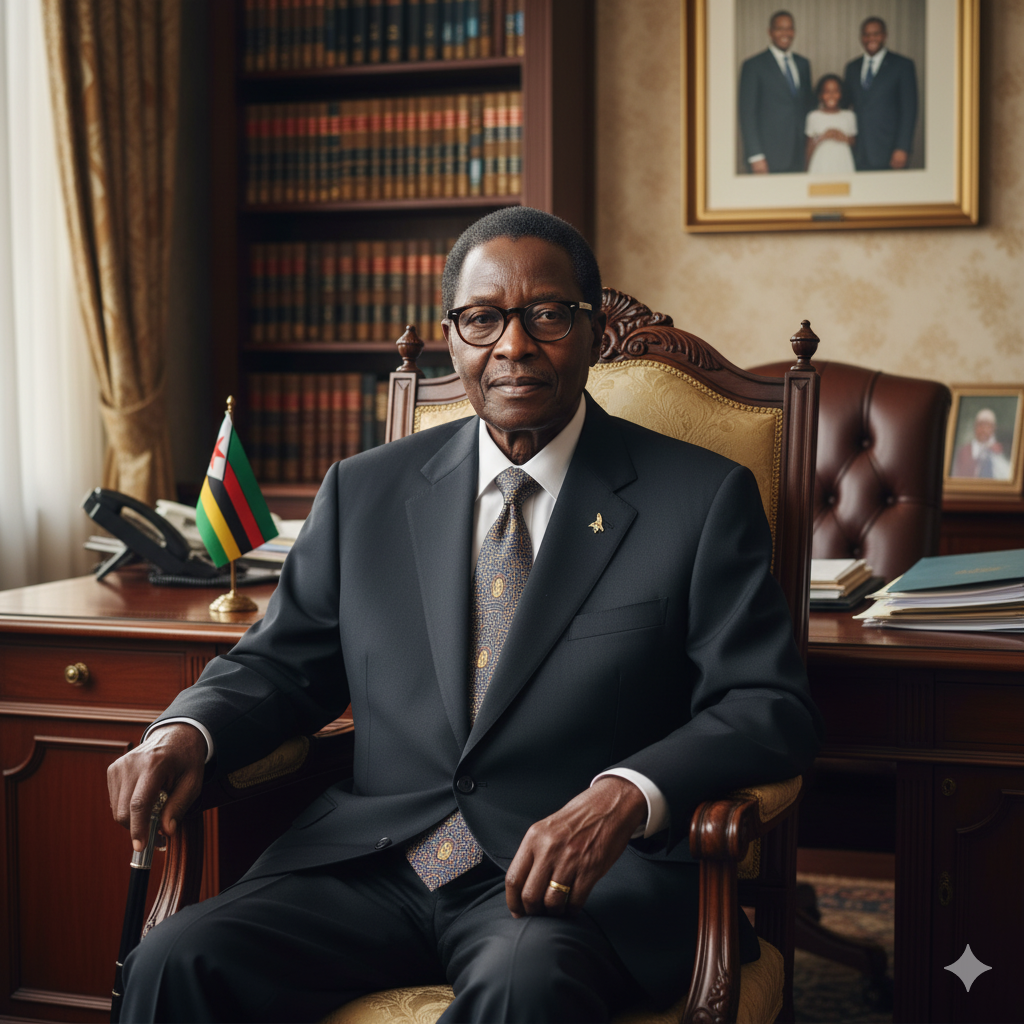
Robert Gabriel Mugabe was born on February 21, 1924, at Kutama Mission, in Zvimba district, near the colonial town of Salisbury (modern-day Harare) (Kriger, 2003). The son of a modest carpenter and a domestic worker, Mugabe’s early life was shaped by the intersecting forces of rural tradition, Christian missionary education, and the pervasive racial segregation of Southern Rhodesia.

Kutama Mission, administered by Jesuit priests, provided him access to formal schooling, which was rare for black Zimbabweans under colonial rule. It was here that young Mugabe displayed precocious intelligence, a voracious appetite for reading, and an early awareness of racial injustice. Friends and teachers remembered him as a quiet, disciplined boy with a piercing intellect but also a growing sense of moral certainty about the inequities of colonial society (Nehanda, 1980).


Political Awakening and Early Activism

By the late 1940s and early 1950s, Mugabe had moved to Salisbury and later to Ghana and Uganda for higher education, inspired by African nationalist movements (Kriger, 2003). During this period, he became increasingly aware of Pan-Africanist ideology and the struggles of colonized peoples across the continent.

In 1963, Mugabe formally joined the Zimbabwe African National Union (ZANU), a breakaway from the more moderate ZAPU. This marked his entry into formal political activism. Within ZANU, he quickly gained a reputation for strategic acumen, ideological discipline, and rhetorical skill. Colleagues described him as a meticulous organizer who excelled at mobilizing cadres and navigating the treacherous landscape of colonial politics (Ndlovu-Gatsheni, 2009).


Imprisonment and Political Fortification (1964–1974)

Mugabe’s activism soon drew the attention of the Rhodesian security apparatus. In 1964, he was arrested and charged with subversive activities against the state. His imprisonment at Gonakudzingwa Restriction Camp became a crucible for his political formation (Kriger, 2003).

During ten years in detention, Mugabe maintained intellectual rigor and organizational discipline. He studied Marxist literature, African nationalist theory, and strategic military manuals. He corresponded with exiled colleagues and wrote memoranda outlining post-independence governance structures. Observers note that his imprisonment, while isolating, solidified his image as a resilient nationalist and allowed him to cultivate loyalty among ZANU cadres (Ndlovu-Gatsheni, 2009).


Exile and the Mozambique Chapter (1975–1979)

Upon his release, Mugabe faced an intensifying Rhodesian counterinsurgency. In 1975, he fled to Mozambique, which had recently gained independence from Portuguese rule and was sympathetic to African liberation movements (Raftopoulos, 2009). Here, he assumed full control of ZANU, overseeing strategy, recruitment, and diplomatic coordination.

While propaganda often depicts Mugabe as a frontline guerrilla commander, archival research and eyewitness accounts indicate that he spent most of the war years in strategic exile, focusing on political and logistical leadership rather than direct combat (Kriger, 2003). His role was that of a political commander, managing relationships with neighboring liberation governments, securing arms, and guiding ZANLA guerrilla operations in Rhodesia.


Myth vs Reality: The Liberation Hero Narrative

The official narrative portrays Mugabe as a heroic guerrilla strategist who led ZANLA to victory. Statues, state media, and textbooks describe daring battlefield feats and personal heroism. However, historians note discrepancies:

  • Mugabe rarely engaged directly in combat, spending most time in Mozambique (Kriger, 2003)
  • His military knowledge was primarily strategic and political, not tactical
  • Propaganda inflated his role, both to inspire cadres and consolidate legitimacy (Ndlovu-Gatsheni, 2009)

The dual narrative — political genius in exile versus war hero on the battlefield — laid the foundation for his post-independence personality cult, which would later expand dramatically during his presidency.


Leadership of ZANLA Guerrilla Forces

Mugabe’s time in Mozambique coincided with the most intense years of the liberation war. He coordinated guerrilla incursions into Rhodesia, negotiated arms shipments, and maintained discipline among ZANLA fighters. Scholars emphasize that while he was not a battlefield hero, his organizational and diplomatic skills were decisive in sustaining the liberation struggle (Raftopoulos, 2009).

He also used his position to eliminate rivals within the movement through internal purges and political maneuvering, ensuring unquestioned loyalty to him personally and to ZANU (Ndlovu-Gatsheni, 2009).

Image placeholder: “Mugabe consulting with ZANLA political commissars. Photo: Liberation Archives.”


Diplomacy and International Networking

While in Mozambique, Mugabe became a skilled diplomat, liaising with liberation movements, socialist states, and international donors. His ability to secure training, weapons, and political recognition was crucial for ZANU’s eventual victory.

He leveraged international sympathy for the anti-colonial cause, aligning ZANU with global leftist movements and creating a network of support that would later shield him during Zimbabwe’s political and economic crises (Kriger, 2003).


The Road to Independence

By 1979, Mugabe had solidified control over ZANU. Negotiations at the Lancaster House Conference brought Zimbabwe to the brink of independence, with Mugabe emerging as the political leader poised to become Prime Minister (Lancaster House Agreement, 1979).

The stage was set: a liberation hero narrative, carefully constructed during years of exile, would become the legitimacy for political dominance. Mugabe’s combination of ideological fervor, organizational control, and external diplomatic networks enabled him to enter independence with unprecedented political capital, ready to translate liberation prestige into governance power.


Conclusion: Seeds of Power and Propaganda

The period from 1924 to 1980 represents both Mugabe’s formative years and the construction of his political mythology. He emerged not as a battlefield hero, but as a politically astute, ideologically disciplined, and strategically minded nationalist. His time in prison and exile forged resilience, while propaganda inflated his image to the Zimbabwean public.

This duality — political strategist vs war hero — would shape his rule for the next 37 years, influencing how Zimbabweans, and the world, perceived him. The lessons of this period underscore the power of narrative, exile networks, and political acumen in consolidating authority, foreshadowing the authoritarian tendencies that would define his presidency.

This is part 1 of the series, watch out for the next article.

We are committed to exposing the forgotten history and concealed facts necessary for a truly informed public. The full narrative of Zimbabwe cannot be corrected in a single effort; however, with the support of our dedicated writers and funders, we will systematically challenge and rewrite the selective record, one investigation at a time.

Legacy and Lessons: Zimbabwe’s Tycoon, State Capture, and the Future of Governance

By Ace Icing — Special Report for Sources Media News
Investigative Series: From Cotton Country to Sanctions 2025


The Empire in Retrospect

Over two decades, Kudakwashe Tagwirei transformed from a cotton trader in Centenary to the head of a sprawling conglomerate spanning fuel, mining, agriculture, infrastructure, and automotive sectors. By 2024, his network of companies controlled critical portions of Zimbabwe’s energy supply, agricultural inputs, and infrastructure projects (NewsDay, 2024).

Tagwirei’s rise reflects a combination of entrepreneurial skill, strategic political alignment, and the exploitation of structural weaknesses in Zimbabwe’s economy. His case demonstrates the capacity of elite networks to accumulate wealth rapidly in environments where state institutions can be co-opted or bypassed.


The Mechanics of State Capture

State capture occurs when private actors manipulate public institutions, policies, and resources to gain disproportionate economic advantages. Tagwirei’s companies provide a textbook case: preferential currency allocations, multi-billion-dollar government contracts, and influence over regulatory approvals allowed him to consolidate power across multiple sectors (OCCRP, 2021).

Parliamentary reports detail how Command Agriculture contracts, fuel import licenses, and infrastructure tenders were awarded to companies within his network, often with minimal competitive tendering (Parliament of Zimbabwe, 2022). The integration of business and political influence illustrates how elite networks can simultaneously advance development goals and entrench inequality.


Quantifying the Empire: 2000–2024

MetricValue
Companies Controlled6 main entities + 41 affiliates
Fuel Market Share~70% of national imports (2024)
Command Agriculture ContractsMulti-billion USD value
Mining ContractsOver $1.2bn coal contracts (Hwange)
Infrastructure Projects$800m+ in awarded contracts

“Tagwirei’s empire consolidated critical sectors of Zimbabwe’s economy under political and commercial influence.”


International Sanctions and Their Long-Term Effects

From 2020 onward, Tagwirei faced sanctions from the US, UK, EU, and Canada due to corruption, state capture, and human rights concerns (US Treasury, 2020; UK Treasury, 2021; EU Council, 2023; Global Affairs Canada, 2024).

While sanctions limited access to international finance and froze overseas assets, domestic operations continued, supported by state contracts and local currency. This duality underscores both the potential and limits of sanctions in curbing the influence of politically embedded conglomerates.


Comparative Insights: African Elite Capture

Tagwirei’s trajectory parallels cases elsewhere in Africa:

  • Dan Gertler (DRC): Exploited political connections to secure mining concessions, with international sanctions slowing but not halting domestic operations (US Treasury, 2017).
  • Isabel dos Santos (Angola): Leveraged familial and political ties to dominate banking, telecommunications, and energy, facing asset freezes but maintaining influence (Reuters, 2020).

These cases highlight a recurring pattern: in weakly regulated political economies, elite networks can resist external pressures while consolidating domestic power.


Economic, Political, and Social Implications

Tagwirei’s dominance has mixed outcomes:

  1. Economic: Created jobs and maintained supply in fuel, agriculture, and infrastructure. Yet market concentration reduced competition, increased systemic risk, and potentially inflated costs (NewsDay, 2024).
  2. Political: Strengthened loyalty-based networks, reinforcing the symbiosis between wealth accumulation and state influence (Sentry, 2021).
  3. Social: Infrastructure and agricultural inputs benefited some communities but highlighted disparities in access to resources and opportunity.

Lessons for Governance and Reform

Tagwirei’s case offers several lessons for Zimbabwe and comparable economies:

  • Transparency in public procurement is critical to prevent concentration of economic power in politically connected networks.
  • Strengthening financial oversight and foreign currency allocation processes reduces opportunities for preferential treatment.
  • Robust regulatory frameworks can mitigate the capacity of private actors to leverage state mechanisms for personal enrichment.
  • International coordination on sanctions must consider domestic economic structures and the resilience strategies of politically embedded conglomerates.

Scholars argue that mitigating elite capture requires a combination of institutional reform, civic oversight, and international engagement (World Bank, 2021).


The Future of Zimbabwe’s Political Economy

Looking forward, the sustainability of Tagwirei-style conglomerates depends on both domestic political continuity and international scrutiny. The rise of alternative actors, changes in leadership, or reform of state mechanisms could redistribute economic power. Conversely, entrenched networks may continue to dominate key sectors, shaping the country’s political and economic trajectory for decades.


Conclusion

Kudakwashe Tagwirei’s story is emblematic of the intertwined nature of wealth, politics, and governance in fragile economies. His empire illustrates the potential of politically embedded business networks to drive growth while simultaneously entrenching inequality and state capture.

As Zimbabwe navigates domestic challenges and international scrutiny, the lessons from Tagwirei’s rise — and the mechanisms by which elite networks operate — are instructive for policymakers, civil society, and regional observers. The saga underscores the delicate balance between entrepreneurship, political influence, and governance in shaping the future of nations.

This is the final article of the series. Until the next one, stay informed.

We are committed to exposing the forgotten history and concealed facts necessary for a truly informed public. The full narrative of Zimbabwe cannot be corrected in a single effort; however, with the support of our dedicated writers and funders, we will systematically challenge and rewrite the selective record, one investigation at a time.

Sanctions, Scrutiny and Survival: The Global Response to a National Tycoon

By Ace Icing — Special Report for Sources Media News
Investigative Series: From Cotton Country to Sanctions 2025


A Tycoon in the Crosshairs

Kudakwashe Tagwirei, Zimbabwe’s most prominent fuel and agribusiness magnate, became a focus of international scrutiny beginning in 2020. His network of companies — spanning fuel, agriculture, mining, infrastructure, and automotive sectors — had grown so interwoven with state operations that foreign governments perceived him as both an economic actor and a conduit for systemic corruption.

On August 3, 2020, the U.S. Treasury Department formally sanctioned Tagwirei under the Global Magnitsky Human Rights Accountability Act, citing corruption and state capture (US Treasury, 2020). The action froze his U.S. assets, prohibited American entities from transacting with him, and marked the beginning of a coordinated international response.


The Legal Framework of Sanctions

The U.S. Treasury’s Office of Foreign Assets Control (OFAC) targeted Tagwirei for his role in manipulating state resources for personal gain. OFAC documents outline that his companies benefited from preferential currency allocations, multi-billion-dollar government contracts, and other state mechanisms in a manner deemed to undermine governance and public trust.

Shortly thereafter, the UK Treasury imposed its own sanctions under its Global Human Rights sanctions regime, citing corruption that undermined democratic processes (UK Treasury, 2021). The European Union followed in 2023 with restrictive measures tied to human rights violations and threats to democracy (EU Council, 2023), and Canada imposed sanctions in 2024 under the Corruption of Foreign Public Officials Act (CFPOA) (Global Affairs Canada, 2024).


Timeline of International Sanctions 2020–2024

DateSanctioning BodyTypeReason
2020-08-03US TreasuryGlobal Magnitsky ActCorruption, state capture
2021-04-12UK TreasuryGlobal Human RightsUndermining democracy, corruption
2023-02-27EURestrictive measuresHuman rights violations
2024-11-08CanadaCFPOACorruption of foreign public officials

“International sanctions against Tagwirei reflect growing global concern over governance and elite networks in Zimbabwe.”


The Impact on Business Operations

Despite these sanctions, Tagwirei’s companies continued to operate domestically. Sakunda Holdings retained a dominant share of fuel imports, Landela Mining won coal contracts, and Sotic International secured infrastructure deals. Reports suggest a combination of legal restructuring, offshore partnerships, and reliance on domestic state mechanisms enabled continued operations (The Independent, 2024).

Analysts describe this as an example of the resilience of politically connected conglomerates in sanction environments. In many cases, sanctions slowed international transactions but could not immediately disrupt domestic revenue flows or state-backed contracts.


Mechanisms of Circumvention

Investigative reporting indicates multiple strategies employed to navigate sanctions:

  1. Front Companies and Offshore Partnerships: Tagwirei used smaller, affiliated entities and foreign trading partners to continue commodity imports and exports (ZimLive, 2023).
  2. Domestic Currency Leverage: Reliance on Zimbabwean dollars and local treasury instruments reduced dependency on sanctioned U.S. transactions.
  3. Political Shielding: Close ties to ministries and the presidency ensured ongoing contract awards and priority treatment in critical sectors.

Experts note that these mechanisms are not unique to Zimbabwe; Dan Gertler in the DRC and Isabel dos Santos in Angola also leveraged networks to mitigate sanctions’ economic impact (Reuters, 2020).


Global Governance and Enforcement Challenges

Sanctions are only as effective as enforcement. OFAC, UK Treasury, EU, and Canadian authorities maintain monitoring programs, but jurisdictional gaps, complex corporate structures, and opaque financial flows limit impact. Tagwirei’s case demonstrates the challenges of sanctioning high-level domestic actors in states with weak regulatory oversight.

Moreover, international firms often hesitate to engage directly with Zimbabwean entities due to compliance risk, which indirectly isolates sanctioned companies from foreign capital but may also entrench domestic dominance.


Domestic Political Response

Within Zimbabwe, sanctions are framed by some government officials as external interference in national economic affairs. Tagwirei, meanwhile, publicly denied wrongdoing, maintaining that his operations were legal and in line with state priorities (The Herald, 2020).

Nevertheless, audits and parliamentary inquiries document that many of his contracts were awarded under preferential conditions, and internal criticism notes the lack of competitive tendering in key sectors such as fuel, mining, and infrastructure (Parliament of Zimbabwe, 2022).


Comparative Sanctioned Tycoons

Other African businessmen facing sanctions illustrate similar patterns:

  • Dan Gertler (DRC): OFAC sanctions in 2017 limited international banking and mining transactions but did not halt domestic operations entirely (US Treasury, 2017).
  • Isabel dos Santos (Angola): Sanctions and asset freezes slowed international investments but relied on complex networks to maintain influence in domestic markets (Reuters, 2020).

The pattern is consistent: politically embedded conglomerates can resist sanctions longer than standard corporate entities, especially when they operate within weakly regulated domestic economies.


Economic and Political Implications

Sanctions imposed on Tagwirei signal international recognition of systemic risk posed by politically connected conglomerates. However, the limited domestic enforcement capacity allowed continued operations. The broader implications include:

  1. Reinforcement of political networks domestically
  2. Persistence of market concentration in critical sectors
  3. Signal to other elite actors that international sanctions may slow, but not stop, state-aligned accumulation

Economists argue that the long-term effect depends on domestic reform, transparency in procurement, and strengthening financial oversight (World Bank, 2021).


The Architecture of Sanctioned Resilience

Tagwirei’s response to sanctions illustrates the architecture of modern elite resilience:

  • Corporate Diversification: Spread across sectors (fuel, mining, infrastructure, agriculture) to insulate against sector-specific disruption
  • Domestic Embedding: Reliance on state contracts and local currency for operations
  • Strategic Partnerships: Use of international trading partners to bypass direct restrictions
  • Legal Shielding: Structuring entities to comply technically with sanction regulations while maintaining operational control

Conclusion

Sanctions against Kudakwashe Tagwirei demonstrate the global community’s concern over corruption, state capture, and human rights in Zimbabwe. Yet the persistence of his domestic empire shows the limitations of sanctions in environments where political patronage, state dependence, and corporate diversification intersect.

Part 5 of this series will conclude the investigation, examining the long-term implications for Zimbabwe’s political economy, the interplay of elite networks with international scrutiny, and lessons for governance across Africa.

This was part 4, watch out for part 5

We are committed to exposing the forgotten history and concealed facts necessary for a truly informed public. The full narrative of Zimbabwe cannot be corrected in a single effort; however, with the support of our dedicated writers and funders, we will systematically challenge and rewrite the selective record, one investigation at a time.
Power and Patronage: Inside Zimbabwe’s New Elite Network

By Ace Icing — Special Report for Sources Media News
Investigative Series: From Cotton Country to Sanctions
2025


The Architecture of Influence

By the mid-2010s, Kudakwashe Tagwirei had transformed from a regional trader into a central figure in Zimbabwe’s economic and political ecosystem. His ascent was not merely a matter of business acumen; it was equally a story of cultivated political capital, strategic alliances, and access to state levers of power.

Investigative reports suggest that Tagwirei’s influence extended across multiple government ministries, state-owned enterprises, and even the office of the president (OCCRP, 2021). Analysts describe him as emblematic of a new elite in Zimbabwe: wealthy, politically connected, and able to operate with minimal regulatory constraint.

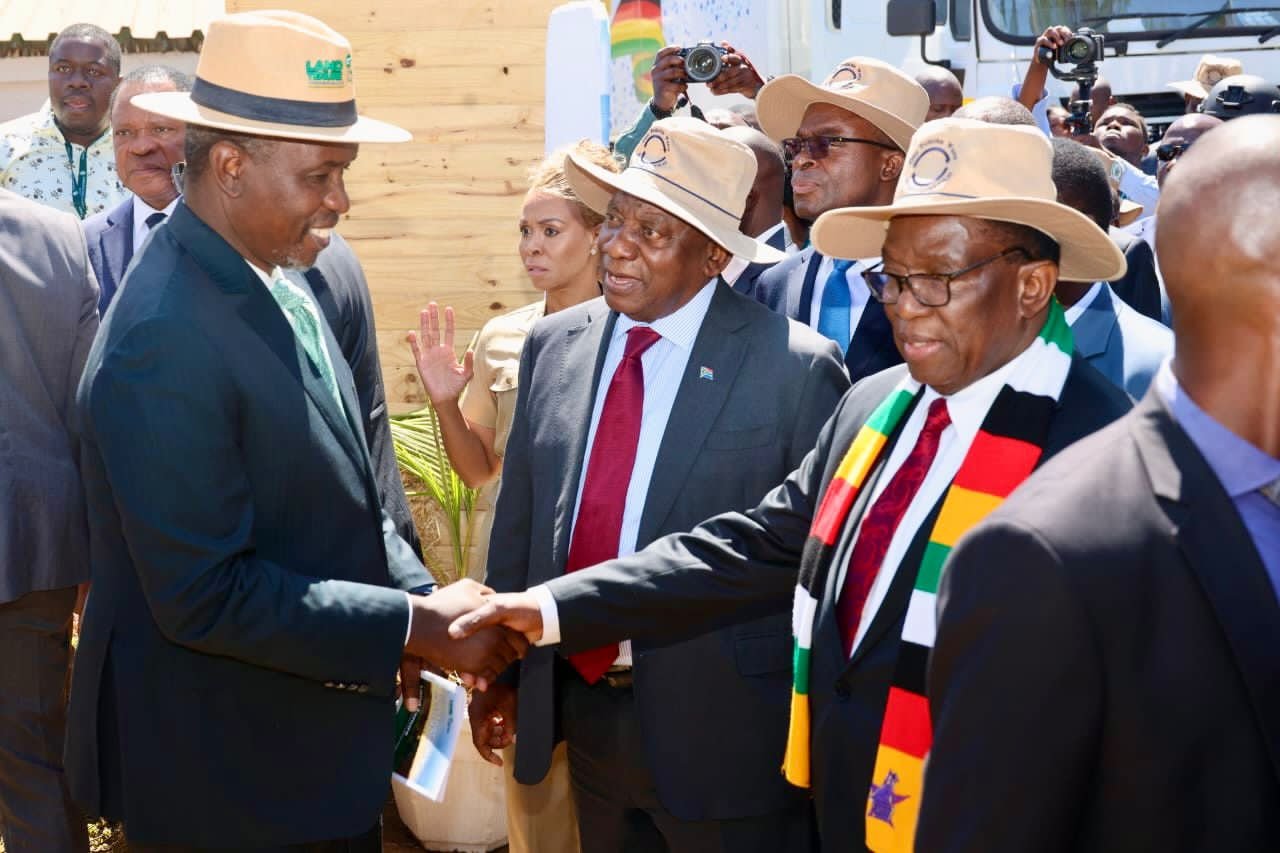
“Tagwirei in Harare, with South Africa President Cyril Ramaphosa and Zimbabwean President Emmerson Mnangagwa. Photo: Ministry of Information.”


ZANU-PF and Political Patronage

From early in his career, Tagwirei demonstrated strategic engagement with Zimbabwe’s ruling party, ZANU-PF. According to campaign finance records and media reports, he became a significant donor to party initiatives, facilitating relationships with senior party officials (BBC News, 2021). These financial contributions were not purely philanthropic; they established him as a trusted partner in projects of national significance, including energy distribution, agricultural mechanization, and infrastructure development.

Political patronage provided access to regulatory approvals, foreign-currency allocations, and lucrative government contracts, creating a reinforcing cycle of wealth and influence. Economists describe this as a “mutually reinforcing oligarchic ecosystem,” where political loyalty and financial power are interdependent (World Bank, 2021).


Ministries and State Enterprises: Strategic Leverage

Ministry of Energy: Tagwirei’s early control of fuel imports gave him an unusual level of influence in Zimbabwe’s energy sector. Access to import licenses and preferential allocation of foreign currency allowed Sakunda Holdings to dominate the market, creating dependence for both government operations and private consumers (NewsDay, 2024).

Ministry of Agriculture: Through the Command Agriculture program, Tagwirei became the principal contractor supplying inputs and machinery, effectively shaping national agricultural output. Parliamentary reports indicate that his companies were awarded contracts worth billions, raising questions about transparency and competitive fairness (Parliament of Zimbabwe, 2022).

Reserve Bank of Zimbabwe (RBZ): Control over foreign-currency allocations amplified his leverage across sectors. By obtaining preferential rates and timely access to scarce U.S. dollars, Tagwirei could fund operations that competitors could not match (OCCRP, 2021).


Key Political Connections: 2010–2020

ConnectionNatureEvidence
ZANU-PFFinancial donor, strategic allyCampaign finance reports, BBC News (2021)
Ministry of AgricultureCommand Agriculture contractsParliamentary Portfolio Committee on Agriculture (2022)
Ministry of EnergyFuel import licensesNewsDay audit (2024)
Reserve Bank of ZimbabweForeign currency allocationsRBZ statements (2020–2023)
President MnangagwaClose business associateMedia reports, sanctions documentation (US, UK, EU)

“Tagwirei’s connections to Zimbabwe’s political and bureaucratic elite underpin his empire-building strategy.”


Networks of Influence: Beyond Zimbabwe

Tagwirei’s model reflects patterns seen across Africa, where political connections substitute for market competition. Dan Gertler in the DRC leveraged political access to secure lucrative mining deals. Isabel dos Santos in Angola used her family ties to dominate sectors from banking to energy (Reuters, 2020).

In each case, political proximity functioned as a currency, allowing select business figures to access scarce resources, evade regulatory scrutiny, and consolidate power in strategic sectors.


State Capture and Economic Implications

Economists describe Tagwirei’s rise as a form of state capture: private interests co-opting public institutions to secure disproportionate economic advantage. The impact is profound: while large contracts and investments generate employment and activity, they distort markets, concentrate wealth, and reduce transparency (Sentry, 2021).

By integrating business operations with state mechanisms — from currency allocation to tender awards — Tagwirei created a self-reinforcing ecosystem where political loyalty and business success were inseparable. Critics argue this model undermines institutional capacity and perpetuates systemic inequality.


The Role of International Observation

International watchdogs have chronicled Tagwirei’s network of influence. The US Treasury, UK Treasury, European Union, and Canada imposed sanctions citing corruption, state capture, and human rights concerns (US Treasury, 2020; UK Treasury, 2021; EU Council, 2023; Global Affairs Canada, 2024).

Sanctions documents highlight his ties to ministries, party structures, and state financial instruments. They also underscore the international perception that elite networks like Tagwirei’s can pose systemic risks to governance, transparency, and economic stability.


Comparative Perspectives on Patronage Economies

Across Africa, politically connected tycoons operate in what scholars term patronage economies. These systems allocate resources and opportunities based on loyalty and access rather than market competition. In Zimbabwe, Tagwirei’s access to treasury bills, import licenses, and multi-billion-dollar contracts demonstrates how patronage networks facilitate both rapid accumulation of wealth and consolidation of political influence (World Bank, 2021).


Consequences for Governance and Society

The intertwining of business and state authority raises questions about institutional resilience. Parliamentary reports suggest that contracts were often awarded with minimal transparency, and independent oversight of expenditure was limited (Parliament of Zimbabwe, 2022).

For citizens, the consequences are mixed: on the one hand, infrastructure projects, fuel supply, and agricultural inputs were delivered. On the other, market distortions, inequality, and erosion of public trust were significant. Tagwirei’s network exemplifies how elite capture can simultaneously stimulate and distort economic activity.


Conclusion

Kudakwashe Tagwirei’s empire is as much political as it is commercial. His ascent illustrates the mechanics of elite networks in Zimbabwe: the alignment of financial resources with political access, the strategic use of state instruments, and the cultivation of loyalty across key institutions.

In the final part of this trilogy, Article 4 will examine how international sanctions targeted these networks, the strategies employed to circumvent restrictions, and the implications for Zimbabwe’s business and political landscape.

Part Three, watch out for part 4

We are committed to exposing the forgotten history and concealed facts necessary for a truly informed public. The full narrative of Zimbabwe cannot be corrected in a single effort; however, with the support of our dedicated writers and funders, we will systematically challenge and rewrite the selective record, one investigation at a time.

Making of an Empire: Fuel, Agriculture and Command State

By Ace Icing — Special Report for Sources Media News
Investigative Series: From Cotton Country to Sanctions
2025


From Cotton to Fuel: Sakunda’s Strategic Pivot

By 2008, Zimbabwe was in the throes of an economic crisis. Hyperinflation had rendered local currency nearly worthless, fuel shortages were chronic, and the black market for U.S. dollars dominated commerce. In this context, Kudakwashe Tagwirei’s Sakunda Holdings transitioned decisively from trading commodities to importing fuel — a move that would redefine both the company and the country’s energy landscape.

The timing was fortuitous. Fuel imports were tightly regulated by the state, and access to scarce U.S. dollars required both political connections and financial sophistication. Sakunda leveraged its early relationships with the Ministry of Energy and the Reserve Bank of Zimbabwe to secure dollar allocations, allowing the company to import petrol and diesel at volumes unattainable by competitors (NewsDay, 2018).

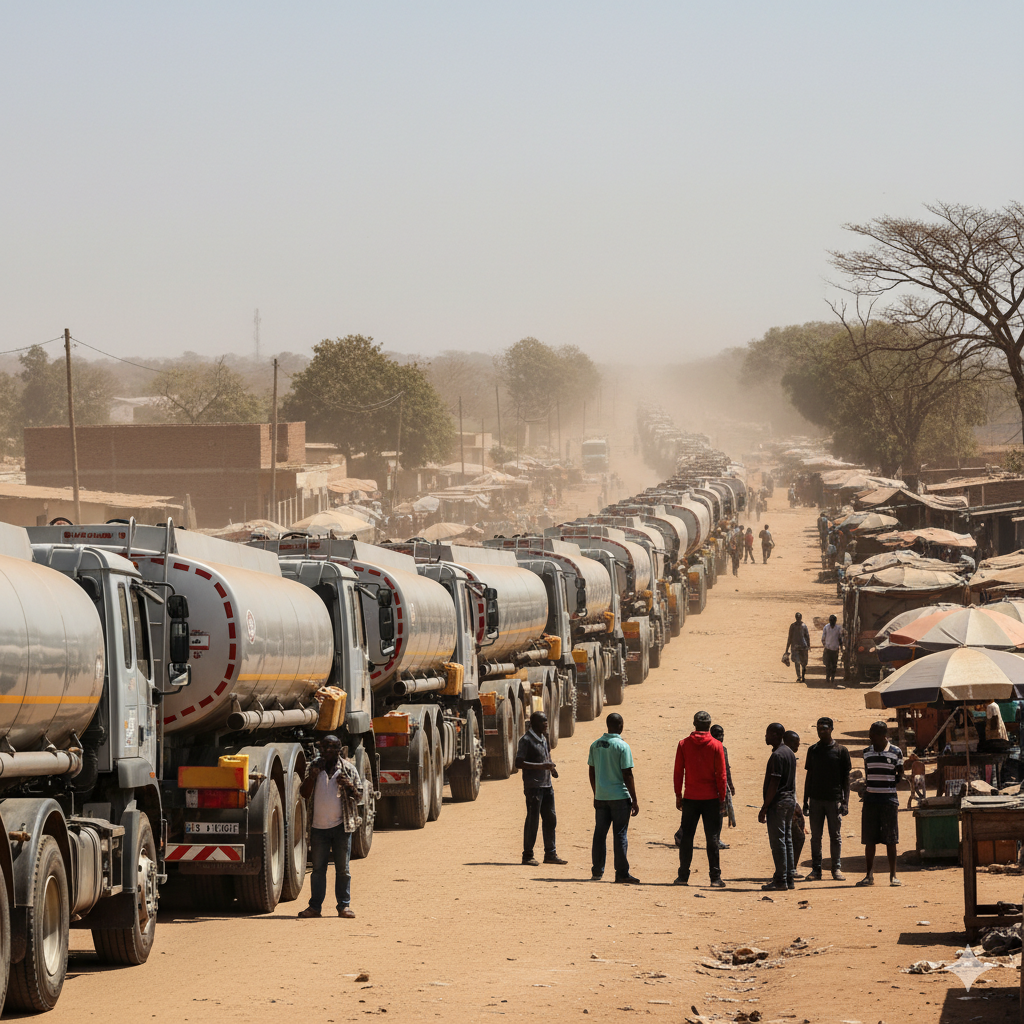
“A line of fuel tankers stretches into the distance on a dry, unpaved road in Africa, underscoring the wait for supply. Source: Sources Media .”

The scale of this operation drew scrutiny. Government audits later revealed that Sakunda and affiliated companies controlled approximately 70% of Zimbabwe’s fuel imports by 2014 (NewsDay, 2024). Analysts described the arrangement as a “quasi-monopoly” made possible by preferential currency allocation and close ties to the political elite.


Command Agriculture: A Billion-Dollar Opportunity

In 2016, the Zimbabwean government launched the Command Agriculture program, an ambitious effort to reverse the country’s declining agricultural output. The program involved supplying farmers with inputs — seed, fertilizer, and machinery — financed through state-backed loans or treasury bills. Sakunda became one of the principal contractors, providing bulk inputs, logistics, and fuel for mechanized farming operations (ZimLive, 2019).

Investigations by Parliament and independent media revealed that Tagwirei’s companies received large amounts of treasury bills, which were converted into U.S. dollars and used to finance further business expansion. A former government official described the process:

“It was clear from the beginning that certain contractors had both the connections and the currency to make the program function — or appear to function — more efficiently than others” (OCCRP, 2021).

The scale was unprecedented. According to parliamentary reports, Sakunda received contracts worth billions of dollars, making it one of the largest recipients of government-backed funding for agriculture. Critics argue that the program, intended to boost food security, instead became a mechanism for wealth accumulation among politically connected businessmen.


Diversification into Mining, Infrastructure, and Agriculture

Beyond fuel and agriculture, Tagwirei systematically diversified his portfolio.

  • Landela Mining: Established around 2018, focusing on coal mining contracts with state utilities (Chronicle, 2021).
  • Sotic International: Infrastructure firm securing road, energy, and urban development contracts (The Herald, 2023).
  • Fossil Agro: Agricultural operations, including mechanized commercial farms linked to Command Agriculture.

The strategic logic was clear: a vertically integrated conglomerate capable of controlling production, transport, and supply of essential commodities. In each sector, access to government contracts and state-backed currency allowed rapid scaling, leaving competitors with fewer resources struggling to maintain market share.


Currency, Procurement, and the Machinery of Advantage

The story of Tagwirei’s empire cannot be told without understanding Zimbabwe’s foreign-currency environment. In a country where U.S. dollars were scarce and the black-market rate diverged sharply from the official rate, control over dollar allocations meant power. Sakunda, by virtue of state connections, consistently received preferential allocations, enabling fuel imports and agricultural input procurement that ordinary businesses could not achieve (OCCRP, 2021).

Government audits later revealed the mechanics: treasury bills issued to Sakunda were often used to purchase foreign currency directly, which was then applied to contracts across multiple sectors. Observers argued that this system both entrenched inequality and incentivized political loyalty over efficiency or innovation (World Bank, 2021).


Key Milestones: 2006–2016

YearEvent
2006Sakunda begins structured fuel imports under state license
2008Secures major allocations amid hyperinflation
2012Forms trading partnerships with international commodity firms
2015Sotic International incorporated for infrastructure contracts
2016Becomes primary contractor for Command Agriculture program

“Tagwirei’s expansion from fuel to a multi-sector conglomerate during a decade of economic instability.”


The Political Logic of Expansion

Tagwirei’s ability to secure multi-billion-dollar contracts was closely linked to his political proximity. Multiple sources confirm that he maintained active communication with senior figures in the Ministry of Agriculture and the Ministry of Energy, as well as President Emmerson Mnangagwa (home.treasury.gov, 2020). Such relationships allowed not only contract awards but also favorable terms of payment, currency access, and priority in allocation of critical inputs.

Economists and governance specialists describe this pattern as “state capture in practice”: an arrangement in which private interests leverage political influence to gain disproportionate economic advantage, often at the expense of transparency and broader social benefit (Sentry, 2021).


Comparative Insights: Africa’s Politically Connected Tycoons

Tagwirei’s trajectory resembles other African figures whose empires are entwined with the state. Dan Gertler in the DRC capitalized on mining concessions and government ties to control strategic natural resources. Isabel dos Santos leveraged Angolan oil revenues and state contracts to accumulate vast holdings in banking, telecommunications, and energy.

Such cases illustrate a common pattern: in environments where formal market mechanisms are weak, access to political power can substitute for competitive advantage, creating concentrated wealth and oligopolistic control (Reuters, 2020).


Consequences for Zimbabwe’s Economy

While the expansion created jobs and ostensibly bolstered food and energy supply, the concentration of economic power raised systemic risks. Critics argue that the preferential allocation of dollars and contracts contributed to distortions in the market, limiting competition and inflating prices (NewsDay, 2024).

Moreover, by tying business success to political proximity, the system fostered incentives for loyalty over efficiency, potentially slowing broader economic reform. Tagwirei’s rise thus exemplifies how state-connected entrepreneurship can simultaneously drive growth and entrench inequities.


The Architecture of a Conglomerate

By 2016, Sakunda Holdings had become the central node in a sprawling network of businesses. Through diversified subsidiaries — energy, mining, agriculture, infrastructure, and automotive — Tagwirei achieved both vertical and horizontal integration, reducing exposure to sectoral shocks and creating a business ecosystem tightly aligned with state priorities.

Financial analysts note that the architecture of this empire allowed rapid reinvestment of profits into strategic areas, often using government-backed instruments. In essence, the conglomerate was a hybrid of private entrepreneurship and state-facilitated accumulation, designed to exploit Zimbabwe’s particular mix of market volatility and political patronage.


Conclusion

The decade between 2006 and 2016 solidified Tagwirei’s position as one of Zimbabwe’s most powerful businessmen. His strategy — leveraging scarce currency, cultivating state ties, and expanding across multiple sectors — provides a blueprint for understanding the emergence of politically connected conglomerates in fragile economies.

In Part 3 of this series, we will examine the networks of influence and state capture that enabled this consolidation of power, mapping the political and financial relationships that made Tagwirei’s empire not just profitable but resilient amid scrutiny and, eventually, international sanctions.


Part Two of our Investigative Series. 

We are committed to exposing the forgotten history and concealed facts necessary for a truly informed public. The full narrative of Zimbabwe cannot be corrected in a single effort; however, with the support of our dedicated writers and funders, we will systematically challenge and rewrite the selective record, one investigation at a time.

Roots & Rise — The Cotton Trader Who Rewired Zim’s Economy

By Ace Icing — Special Report for Sources Media News
Investigative Series: From Cotton Country to Sanctions
2025


The Humble Beginnings of a Future Tycoon

Centenary, a modest township in Zimbabwe’s Mashonaland Central province, is little more than a crossroads of dusty roads and cotton fields. In 1975, Kudakwashe Regimond Tagwirei was born here, the son of a local trader who bought and sold cotton seeds, maize, and small livestock.

Life was a matter of seasonal cycles, informal markets, and the kind of resilience often invisible to outsiders. Yet, by the early 2000s, this unassuming cotton trader would become the architect of one of Zimbabwe’s most formidable business empires.

Tagwirei’s early years coincided with a turbulent period in Zimbabwean economic history. The Economic Structural Adjustment Programme (ESAP) of the 1990s liberalized trade but introduced severe social and economic shocks, including inflation, devaluation, and the collapse of many state enterprises. In this environment, nimble traders in rural markets could thrive if they understood both supply chains and the informal currency networks that lubricated Zimbabwe’s economy (World Bank, 2001.


Early Entrepreneurial Moves: Cotton Trading and Informal Networks

By the 1990s, Tagwirei had begun trading cotton directly with farmers in Mashonaland Central and Midlands provinces. According to investigative reporting by ZimLive (2019), he leveraged a network of local brokers and transporters to move cotton from rural farms to Harare-based buyers. The modest profit margins of this business were amplified by strategic access to hard-to-obtain inputs, such as fertilizer and fuel for transport.

This early stage is crucial for understanding the patterns that would define Tagwirei’s later empire: combining opportunistic trade with informal state linkages. In this period, the Zimbabwean government allocated foreign currency to select traders under a system ostensibly meant to stabilize critical imports. Tagwirei’s ability to access scarce currency — even modest sums — gave him an edge over competitors (OCCRP, 2021).


Sakunda Holdings: Foundation of an Empire

In 2000, Tagwirei formally founded Sakunda Holdings, a small trading company based in Harare. At first, Sakunda dealt primarily in agricultural commodities and small-scale logistics. However, the economic collapse of the early 2000s, coupled with hyperinflation and frequent fuel shortages, created unusual opportunities for those with liquidity and government connections.

By 2008, Sakunda had expanded into fuel imports, acquiring licenses to supply petroleum to Zimbabwean markets. Analysts describe this period as a critical pivot point: Tagwirei’s company was now no longer a local trader but a participant in strategic sectors essential to the country’s functioning (NewsDay, 2018). Access to foreign currency was a limiting factor in these deals, and Sakunda’s early connection to state officials enabled it to acquire dollars at preferential rates, a competitive advantage few could match.


The Political Economy of Early 2000s Zimbabwe

The combination of economic liberalization and political patronage shaped Zimbabwe’s new business elite. Tagwirei’s ascent cannot be understood purely as a story of entrepreneurial ingenuity; it unfolded within a network of political relationships that provided both protection and preferential access.

The Sentry (2021) and the Organized Crime and Corruption Reporting Project (OCCRP) documented that Tagwirei’s companies benefited from access to treasury bills, subsidized contracts, and high-level introductions to ministries critical to fuel, agriculture, and infrastructure (Sentry, 2021).

Such access is not unique to Zimbabwe; similar dynamics have been observed with Dan Gertler in the Democratic Republic of Congo and Isabel dos Santos in Angola, where political networks translated directly into resource accumulation and control over strategic sectors.


Key Milestones: 1990–2005

YearEvent
1990sBegan cotton trading in Centenary and Midlands provinces
2000Founded Sakunda Holdings as a trading company
2003Expanded into maize and fertilizer logistics
2005Developed first informal network for fuel import access via ministry connections

“A concise view of Tagwirei’s formative business years, illustrating the incremental accumulation of influence and resources.”


Informal Networks and Early State Linkages

By mid-2000s, Tagwirei had cultivated relationships with officials in the Ministry of Agriculture and the Reserve Bank of Zimbabwe. Such connections were essential in a context where foreign currency scarcity dictated which companies could import fuel, fertilizer, or other strategic commodities.

The pattern was clear: political proximity yielded business advantage. According to the OCCRP (2021), treasury bills issued to Sakunda were often converted into U.S. dollars through informal channels, creating liquidity that allowed further expansion into mining and fuel importation. These operations foreshadowed the wider empire Tagwirei would consolidate in the next decade.

“Harare, Zimbabwe’s capital, where early Sakunda deals with ministries were negotiated. Photo: Sources Media News.”


Comparative Context: Lessons from Africa

Tagwirei’s early career parallels other African tycoons whose rise combined entrepreneurial acumen with state access. Dan Gertler in the DRC leveraged mining concessions and political ties, while Isabel dos Santos in Angola benefited from contracts and oil revenue allocations. In Zimbabwe, Tagwirei applied a similar blueprint on a national scale: start small, leverage scarce resources, build political capital, and expand into strategic sectors where state approval is mandatory.

Economists argue that such systems create perverse incentives: businesses thrive not through efficiency or innovation but through proximity to power. This “political arbitrage” shapes the distribution of wealth, the allocation of resources, and the trajectory of national economic performance (World Bank, 2021).


Early Signs of an Empire

By 2005, Tagwirei’s enterprises had begun moving beyond cotton and food commodities. Sakunda was importing fuel on a commercial scale, establishing a foothold in infrastructure logistics, and positioning itself to bid for government contracts. The foundations of a diversified corporate network were set: a combination of energy, logistics, and agricultural interests with state-backed access to finance.

Observers at the time noted that Tagwirei operated with a subtle mix of entrepreneurial foresight and political tact. As one Zimbabwean economist commented:

“You can’t understand Tagwirei purely in market terms. He navigates the corridors of power as adeptly as he navigates supply chains” (The Standard, 2020).


The Seeds of Later Consolidation

What began in the cotton fields of Centenary had laid the groundwork for dominance over sectors critical to Zimbabwe’s economy. By 2005, the informal and formal networks Tagwirei cultivated allowed him to access foreign currency, acquire import licenses, and set the stage for eventual involvement in the Command Agriculture program (2016–2018), multi-billion-dollar fuel contracts, and mining ventures.

The dramatic transformation from local trader to nationally significant business actor was a product not just of ambition, but of circumstance: a volatile economy, hyperinflation, scarce hard currency, and porous institutional controls created fertile ground for consolidation.


Conclusion

Kudakwashe Tagwirei’s formative years reveal the interplay of entrepreneurship, political networking, and strategic opportunism. His early cotton-trading ventures were more than a prelude; they were the laboratory in which a broader strategy for empire-building was tested.

By navigating Zimbabwe’s economic turbulence and cultivating the right political alliances, Tagwirei positioned himself to capitalize on state-linked opportunities that would define his later notoriety as a sanctioned tycoon.

In the next installment of this series, we will explore how Tagwirei transformed these early advantages into a multi-sector business empire, his entanglement with government contracts, and the pathways through which political influence became economic dominance.

Part One of our Investigative Series. The journey from Zimbabwe’s foundation as a key agricultural exporter—a ‘Cotton Country’—to a nation defined by stringent international sanctions in 2025 is a history shrouded in secrecy.

We are committed to exposing the forgotten history and concealed facts necessary for a truly informed public. The full narrative of Zimbabwe cannot be corrected in a single effort; however, with the support of our dedicated writers and funders, we will systematically challenge and rewrite the selective record, one investigation at a time.